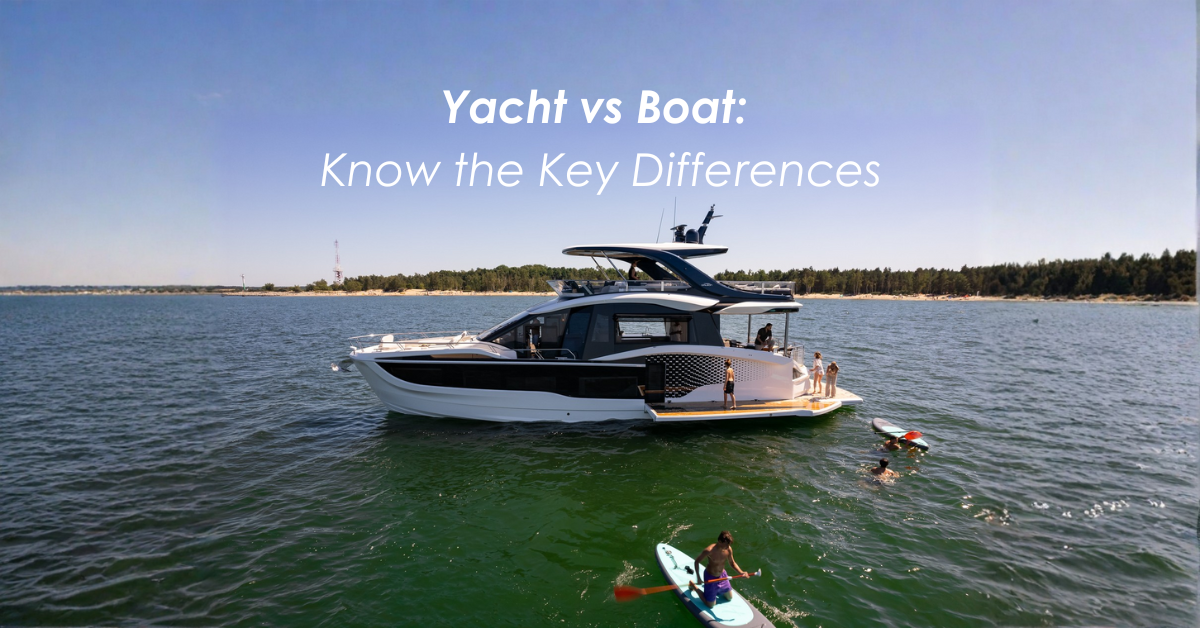
When someone first steps into the nautical world, one of the most common questions is: What’s the difference between a yacht and a boat? Although both are used for leisure and recreational navigation, there are key differences in size, usage, luxury, engine type, licensing, and even legal regulations.
Below, we clearly explain the characteristics that distinguish a yacht from a boat—so you can choose the one that best fits your sailing style.
Technical Differences
Size and Design
In nautical terms, a yacht is generally considered any private recreational vessel longer than 10–12 meters, designed for open sea navigation.
Meanwhile, a boat or small motorboat typically measures between 5 and 8 meters—ideal for bays, lakes, or short coastal outings.
Quick tip: If a vessel can’t be transported on a common trailer due to its beam or length, it’s probably considered a yacht.
Yacht Advantages:
Small Boat Advantages:
Greater stability and autonomy
Portable and easy to transport
Can include cabins, kitchen, bathrooms, and a flybridge
Ideal for beginners and coastal areas
Engine and Performance
Yachts usually feature inboard diesel engines—powerful and reliable for long voyages. A medium yacht might have two 260 HP engines. Boats or smaller motorboats often use gasoline outboard motors, prioritizing speed and agility over long-range capabilities.
Example: A sport boat may reach higher speeds than a large yacht, but it consumes more fuel and isn’t designed for long journeys.
Yacht: Stability, reliability, comfort
Small boat: Agility, lower operating costs
Autonomy and Seaworthiness
Yachts are built for extended trips and open sea cruising, equipped with large fuel tanks, water reserves, and complete navigation systems (radars, autopilot, long-range VHF radio). Boats, on the other hand, are designed for a few hours close to shore.
In summary:
A yacht can cross seas and handle high waves
A small boat is better for calm conditions and short distances
Legal Differences: Registration, Licenses & Taxes
Registration and Classification
In most countries, yachts must be registered with maritime authorities and undergo technical inspections. Small boats often have simpler procedures—and in some cases may be exempt from registration if under a certain size.
Navigation Licenses
Operating a yacht requires advanced licenses (e.g., Yacht Master or Captain’s license). A small boat can often be operated with a basic license—or none in some countries if its engine and size are small.
In Mexico, for example, a license is not required for small private boats, but is required for commercial or charter use.
Taxes and Administrative Costs
Yachts are considered luxury goods and usually face higher taxes and marina fees. Small boats cost far less to moor, insure, and maintain.
Luxury and Comfort Differences
Luxury is perhaps the most noticeable difference. A yacht can offer a floating hotel experience: cabins, full bathrooms, equipped kitchen, air conditioning, and high-end electronics.
Small boats are focused on functionality: compact cockpit, outdoor seating, and basic equipment.
Yacht
Premium materials (teak, steel, leather)
Crew available
Premium lifestyle
Small Boat
Easy to clean
Low maintenance
Great for quick getaways and water sports
Recreational Use Differences
Yachts are designed for long trips, cruising, and multi-day stays onboard.
They can comfortably accommodate 10–20 people, often with private cabins and indoor spaces. Recreational boats or small motorboats are meant for day outings, fishing, diving, or waterskiing.
They typically return to the marina the same day, as they lack overnight amenities.
Yacht: Perfect for long-distance leisure with friends or family Boat: Ideal for spontaneous, low-cost sea adventures
Size and Capacity Comparison
Feature
Yacht
Small Boat or Motorboat
Length
Over 10–12 m (up to >40 m for superyachts)
Avg. 4–8 m
Capacity
10–20 people
4–8 people
Autonomy
High – long-distance voyages
Limited – short trips
Comfort
Cabins, bathrooms, kitchen, flybridge
Limited or open space
Cost
Hundreds of thousands to millions USD
Thousands to tens of thousands USD
Which One Should You Choose?
It depends on your budget, nautical experience, and the type of navigation you enjoy:
If you seek luxury, long trips, and stability—go for a yacht.
If you prefer simplicity, speed, and ease of handling—a small boat will do just fine.
Both offer unique ways to enjoy the sea. A yacht represents a sophisticated, relaxed lifestyle, while a recreational boat is perfect for quick, accessible adventures.